If You’re on Ozempic or Wegovy Your Oral Surgeon Needs to Know
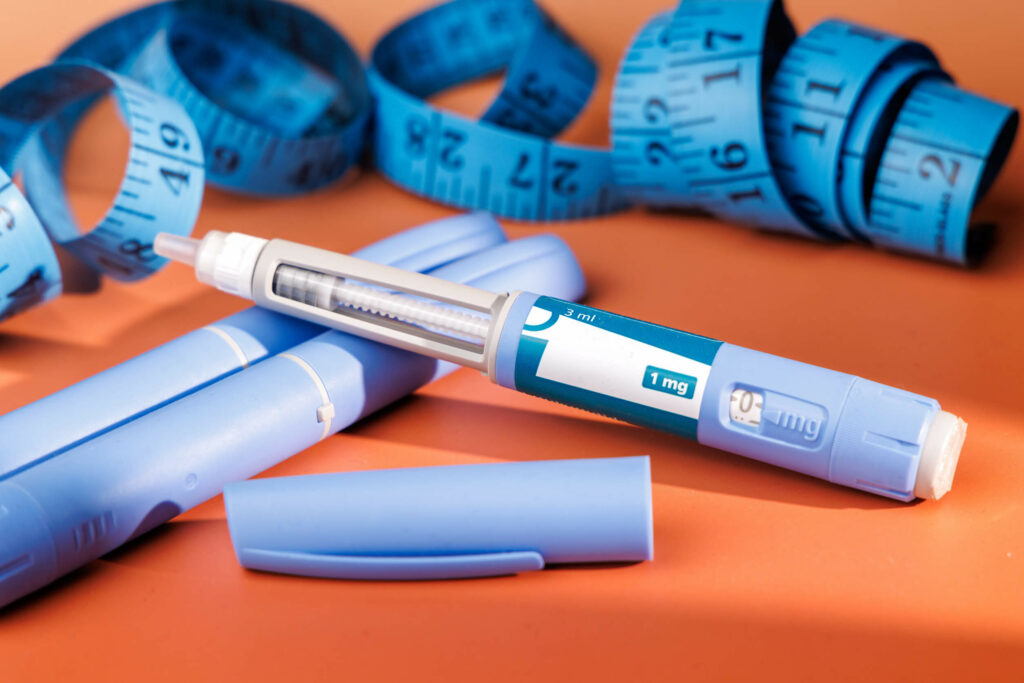
GLP-1 medications — semaglutide (Ozempic, Wegovy), tirzepatide (Mounjaro, Zepbound), and similar drugs — are now among the most widely prescribed in the country. If you’re a patient here, there’s a reasonable chance you’re taking one. Here’s what that means for your oral health.
The big picture: These medications affect more than blood sugar and appetite. They create oral health considerations that matter — especially for surgical procedures like implants and extractions.
What’s happening in your mouth:
- Dry mouth. GLP-1 drugs reduce saliva production, a side effect confirmed in clinical literature and reported widely by patients. Saliva isn’t just comfort — it neutralizes acid and protects enamel. Less saliva means faster decay and higher infection risk around surgical sites. (Healthline, June 2025; ADA SmileCon 2025)
- Acid exposure. Nausea and vomiting — common early side effects — bathe teeth in stomach acid, accelerating enamel erosion. (The Hill August 2025)
- Bone density changes. A 2024 randomized controlled trial published in eClinicalMedicine (Hansen et al.) found that 52 weeks of weekly semaglutide reduced hip bone mineral density by 2.6% and lumbar spine density by 2.1%, with increased bone resorption. For patients considering dental implants — which depend on healthy jaw bone for successful osseointegration — this is a relevant conversation to have before treatment.
- Nutrition gaps. Appetite suppression often means patients aren’t eating enough protein, calcium, or vitamin D to support post-surgical healing. Implant success depends on the body’s ability to build bone around the implant.
What to do:
Tell us you’re on a GLP-1 medication before any procedure. This isn’t a disqualifier — it’s information that helps us plan better. For implant candidates, we may recommend additional evaluation of bone density, adjusted healing timelines, or nutritional guidance before and after surgery.
The research on these medications is still developing. What’s clear is that the mouth doesn’t operate separately from the rest of the body — and a medication this powerful deserves a conversation.
Questions? Call our Hagerstown or Chambersburg office. We’re happy to talk through how your current medications may affect your treatment plan.
Learn more about our dental services and schedule your consultation today. All of our surgeons at Oral and Facial Surgery are board-certified by the American Board of Oral and Maxillofacial Surgery and, with locations in Hagerstown, Maryland and Chambersburg, you’re sure to find an office nearby. Call us in Maryland at 301-791-1700 or 717-264-7828 in Pennsylvania. We look forward to answering your questions!
The information provided on this website should not be used to diagnose or treat any medical condition and is not meant to take the place of professional medical advice. If you think you have a medical problem, please seek the advice of a physician. Call 911 for all medical emergencies.